The Reefs, One by One
Nine places get sold as snorkeling in Zanzibar. They are not interchangeable, and only some of them have a bookable boat on this page.
Mnemba Atoll — the famous one
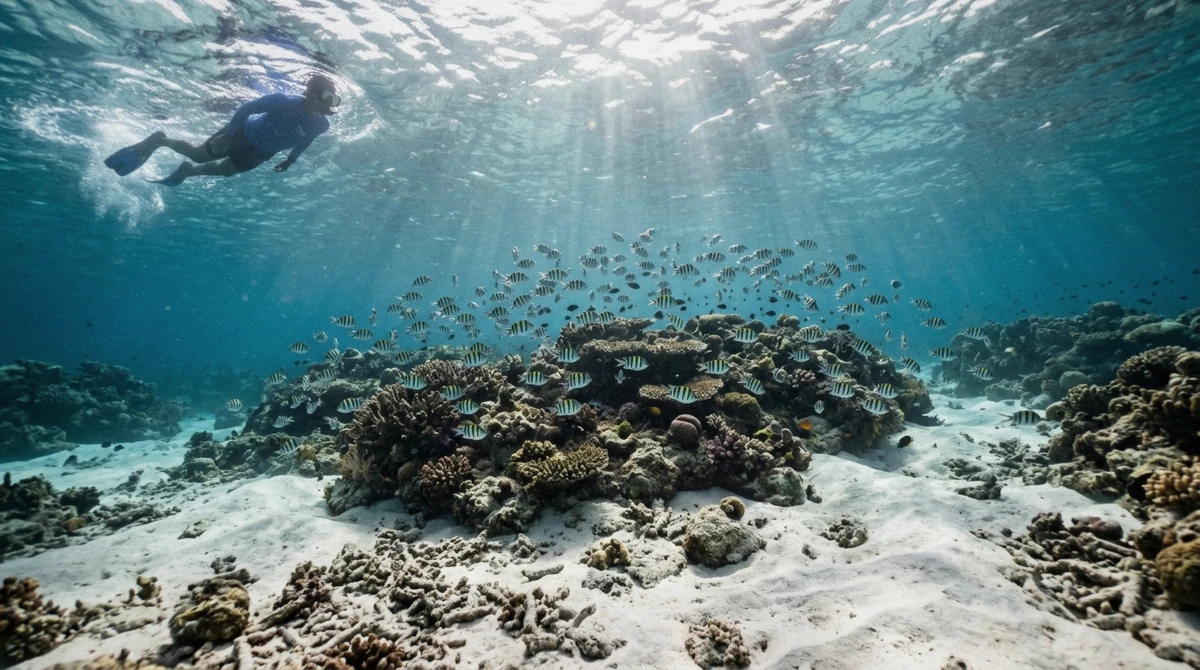
A coral islet off the north-east coast, ringed by white sand, with the archipelago's best-known reef around it at roughly two to five metres. Over 400 fish species, no fishing, excellent visibility. It is genuinely good, and it is genuinely crowded: dozens of boats converge every morning and drop snorkelers onto the same stretch of reef.
One thing catches people out. Mnemba Island itself is private — the andBeyond lodge is the only thing on it — and day visitors may not land on the beach. Every trip snorkels the surrounding atoll water, which the Kendwa listing states in writing. Reviewers on other listings also report crews substituting a dead patch of reef nearby for the atoll itself, which is an argument for booking an operator with a long, recent review history rather than the cheapest boat on the beach.
Reached here by the $55 Kendwa trip, the private safari and the $42 half-day.
Tumbatu — the one that still has coral
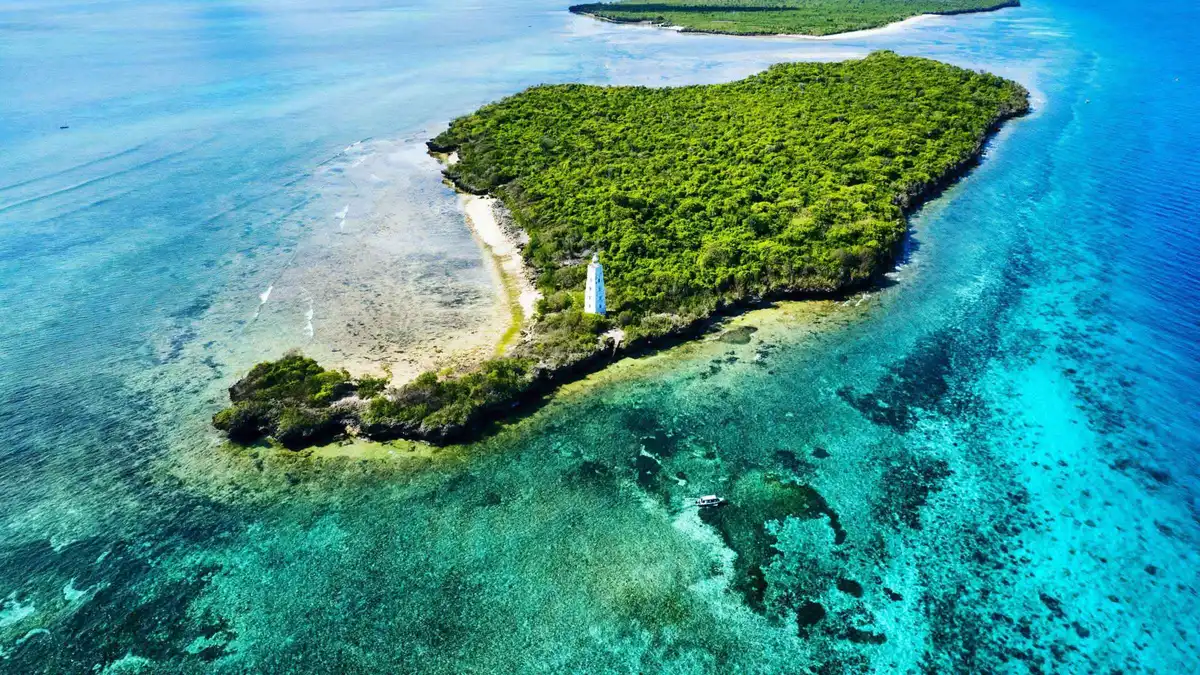
About two kilometres off the north-west coast near Nungwi, with coral gardens in noticeably better shape than Mnemba's and a fraction of the traffic. Batfish, ribbon eels, leaf fish, nudibranchs, pipefish and juvenile sweetlips are what experienced snorkelers come for. Most local boats actually stop at Mwana wa Mwana, the islet off Tumbatu's northern tip which separates from the main island at high tide.
If you are staying in Nungwi and comfortable arranging things yourself, a local boat can be had for under $15 — with no guide, no kit worth using and no schedule. The organised small-group trip is $71 and caps the boat at eight.
Menai Bay and Kwale — the Safari Blue water
The conservation area off the south-west coast, reached from Fumba village. Snorkeling here is a stop inside a bigger day: dhow sailing, a sandbank, a mangrove lagoon swim and a seafood BBQ on Kwale Island. The reef is decent rather than spectacular; the day is the product.
Reached here by the Safari Blue day trip.
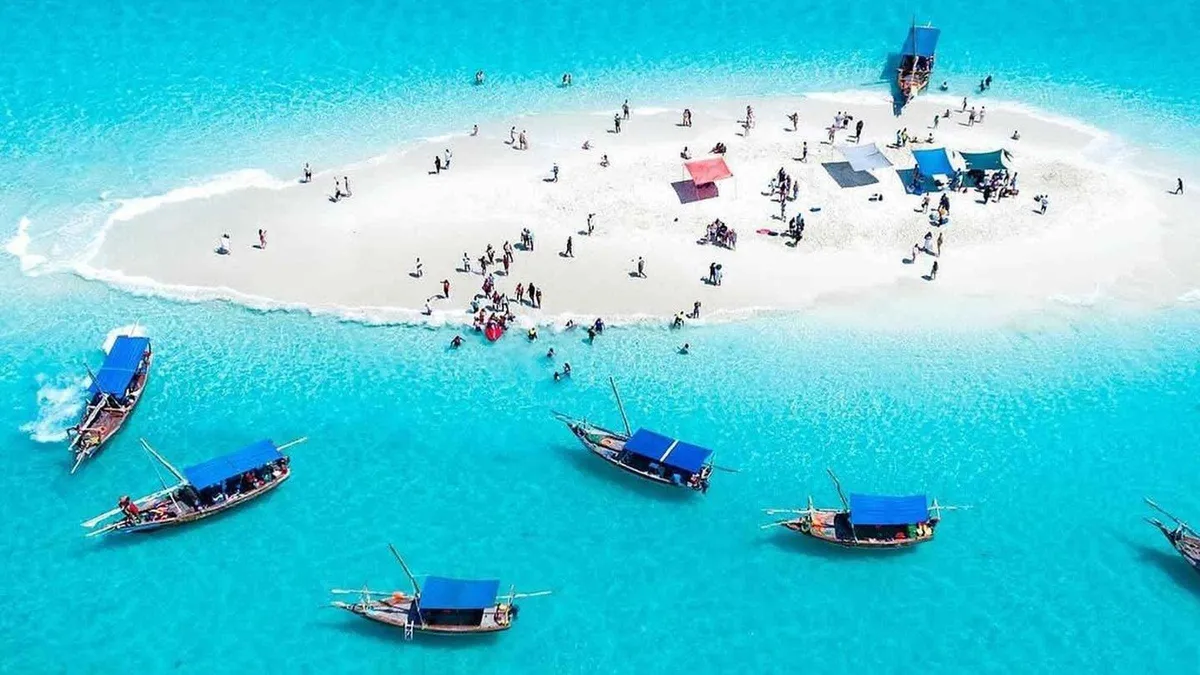
Nakupenda and Prison Island — the Stone Town half day
Changuu, universally called Prison Island, is a thirty-minute dhow ride from Stone Town. Its 1894 building never actually held prisoners — it opened as a yellow-fever quarantine station — and the draw today is the colony of Aldabra giant tortoises, some over two centuries old. Nakupenda is the sandbank nearby where the swimming and snorkeling happen. The reef is modest, mornings collect cruise passengers, and the water is warm and shallow enough for children.
Reached here by the Prison Island and Nakupenda day, where $22 in fees is payable on the day.
Chumbe Island — the best reef, and not on this page
Chumbe Island Coral Park, eight kilometres off the west coast, is arguably the finest snorkeling in East Africa: a sanctuary with around 200 hard coral species and over 440 fish species, closed to fishing since the 1990s. Divers who have seen both describe it as far more impressive than Mnemba.
It is also deliberately hard to reach. A maximum of fourteen day visitors are allowed on the island at any time, the day trip runs about $120 with a further $25 Blue Economy Levy for adult foreigners, bookings open only a few days ahead and depend on lodge availability, and the guided snorkel is roughly an hour at low tide, because currents build over the reef when the water rises.
We do not compare a Chumbe listing here. Resold seats on the platforms have appeared at more than double the island's own price, and there is no reason to pay a middleman for something with fourteen places. Book it at chumbeisland.com, plan the rest of your itinerary around the date you get, and treat it as the reef trip of the holiday.
Blue Lagoon, Michamvi and Pingwe — the starfish photo
A calm, shallow east-coast spot near Michamvi and Pingwe, snorkelable straight off the beach, and the source of most of the starfish pictures you have seen from Zanzibar. It suits families and first-timers, and guided trips run roughly $30 to $50, often bundled with lunch at The Rock restaurant.
The catch is the tide. At low water the lagoon becomes too shallow and too fragile to snorkel, and on the east coast that window can be narrow. Do not book a Blue Lagoon morning without a tide chart in front of you.
Nungwi — the free one
The most dependable shore snorkeling on the island. The reef at the northern tip is narrow and open to the sea, with a sandy drop-off punctuated by coral patches, and unlike the east coast the water stays deep enough to swim through most of the day. Free with your own mask; guided sessions run about $15 to $30.
Nungwi is also the one place regularly offering night snorkeling with bioluminescent plankton. The coral is patchy rather than continuous and the beach vendors are persistent, but no other spot lets you decide to snorkel twenty minutes before you do it.
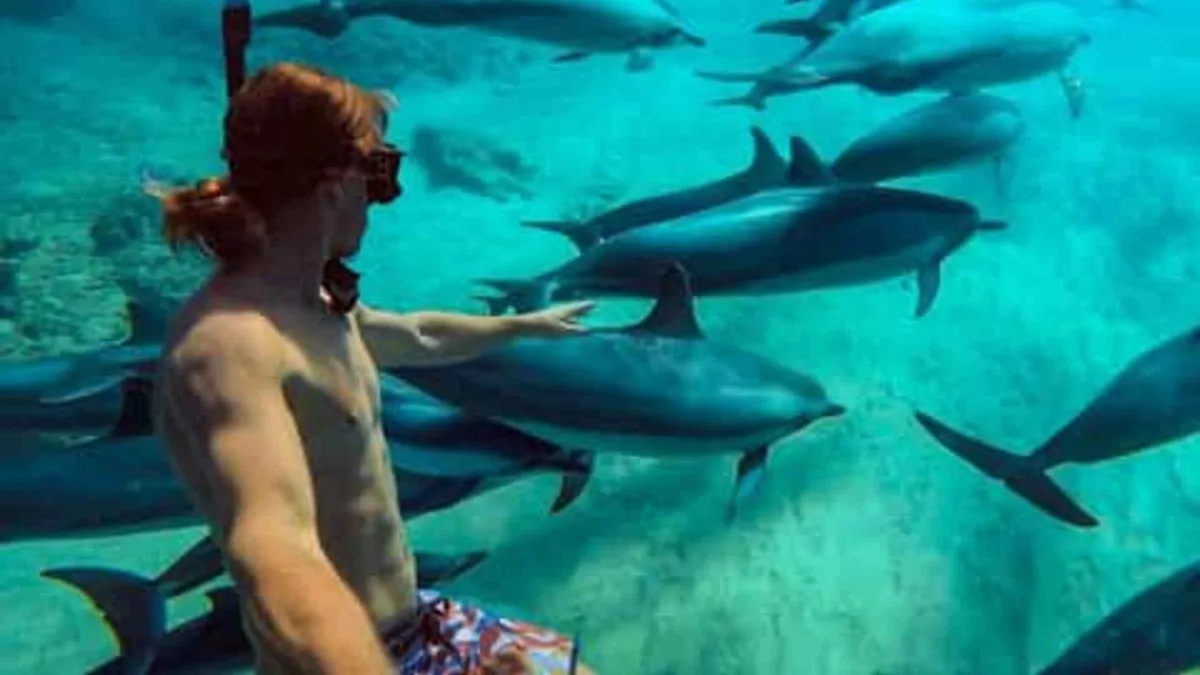
Kizimkazi — the dolphin village
A fishing village at the southern tip, and the island's original dolphin-watching centre; bottlenose and humpback dolphins are both regularly seen. Trips run $30 to $50 and pair a dolphin search with a nearby reef stop, where the snorkeling is decent but secondary.
It is also where the ethics question is sharpest, and it is a ninety-minute-plus drive from the north coast. If you are based at Nungwi or Kendwa, the Mnemba and Tumbatu boats reach dolphins without the transfer.
Pemba — the serious one
Fifty kilometres north of Unguja, with the archipelago's least visited reefs — Misali Island and the Emerald Reef, giant groupers, reef sharks, coral walls and almost no boats. Getting there means a thirty-minute flight or a ferry, trips run $50 to $100 and up, and accommodation is thin and eco-lodge shaped.
Pemba works as a two- or three-night extension, never as a day trip. Currents around Misali can be strong. If you have snorkeled Mnemba and left flat, this is the honest answer to where the good stuff went.
 Snorkeling Zanzibar
 from $55
Fees included
from $55
Fees included